United deepens premium fare segmentation creating new gains and trade-offs
- April 8, 2026
-





United Airlines is extending fare segmentation deeper into its premium product, introducing a new tiered structure across United Polaris and United Premium Plus on selected routes in a move that is likely to have real implications for New Zealand-based corporate travellers and travel managers.
The airline said the new fare categories will apply on long-haul international flights, transcontinental US services and selected Hawaii routes, with rollout beginning in select markets this month before expanding further later in 2026. Under the new structure, premium cabin customers will be able to choose between base, standard and flexible fares. United said the base option is designed to offer the lowest entry price point, while standard includes benefits such as free seat selection, additional checked baggage and the ability to make changes. Flexible fares will be fully refundable and include all the benefits available in the standard category.
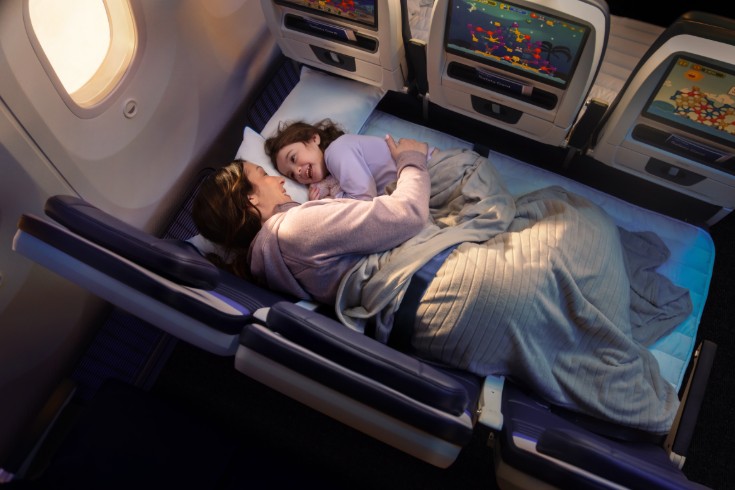
For New Zealand corporate travellers, the advantages are clear. The most immediate is sharper fare choice. Companies that want the comfort of a premium seat but do not always need maximum flexibility may find a lower entry point into United’s premium cabins, particularly on itineraries touching the US. For managed travel programmes, that could create more room to balance traveller wellbeing with cost control. At the other end of the spectrum, travellers whose schedules change frequently will still have access to a fully refundable option, making it easier for travel managers to align policy with trip purpose and traveller seniority.
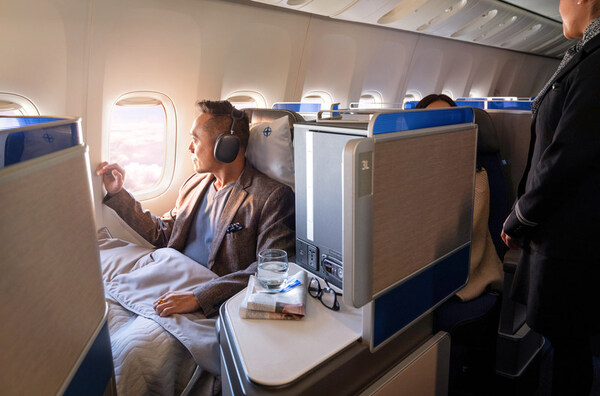
There is also a product-positioning advantage. United said the front cabin will now be branded United Polaris on select transcontinental US flights and longer Hawaii services. On those routes, travellers booking standard or flexible Polaris fares will receive access to the United Polaris lounge, while those purchasing the base Polaris option will instead have access to the United Club. For premium travellers connecting onwards within the United States, that creates a more clearly tiered proposition around comfort, lounge access and flexibility.
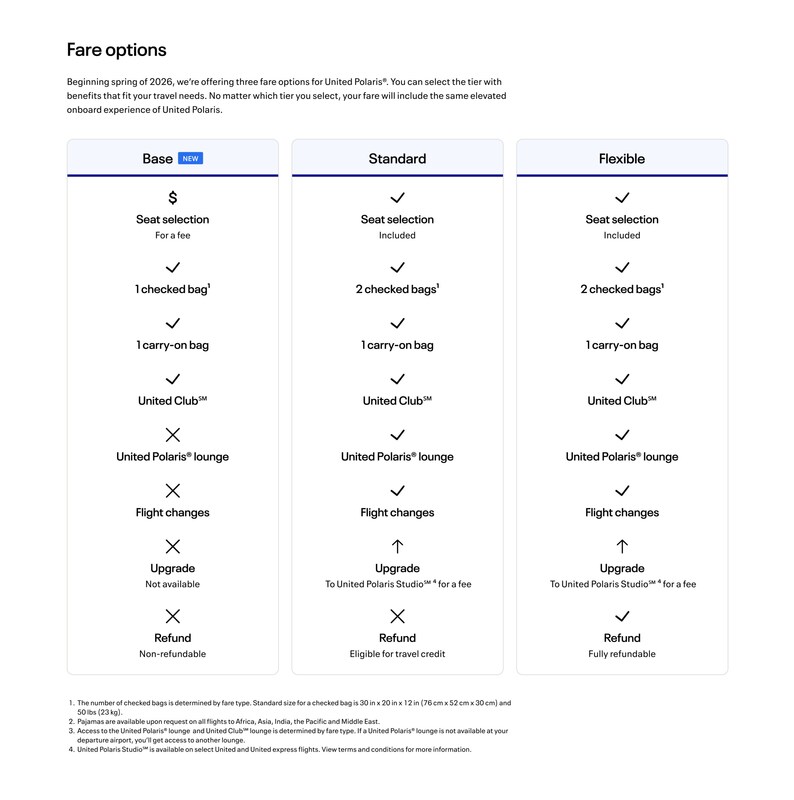
The disadvantages, however, are just as important. For Kiwi corporate travellers, this change adds another layer of complexity to premium booking decisions. What was once assumed to be included with a front-cabin ticket will now vary more sharply depending on the fare tier purchased. Lounge access, refundability, baggage allowance and change flexibility will need closer scrutiny at the point of booking, particularly for executive assistants, travel bookers and TMCs managing multi-sector itineraries.
There is also the risk of false economy. A cheaper base premium fare may look attractive at the time of booking, but the value equation can shift quickly if a traveller later needs to change plans, select seats or access higher-tier lounge facilities. For corporate travellers whose schedules are often fluid, the lowest premium fare may not always prove the smartest buy. That is especially relevant in the current environment, where airlines are becoming more sophisticated in how they merchandise premium cabins and unbundle benefits that were once more broadly assumed.
The bigger picture is that premium air travel is becoming more personalised, but also more conditional. United’s new structure gives companies and travellers more control over what they pay for, yet it also demands a more disciplined approach to comparing inclusions. For New Zealand corporates travelling to, through or within the United States, the opportunity is greater choice. The challenge is making sure the fare bought actually matches the traveller’s real needs once the journey begins